
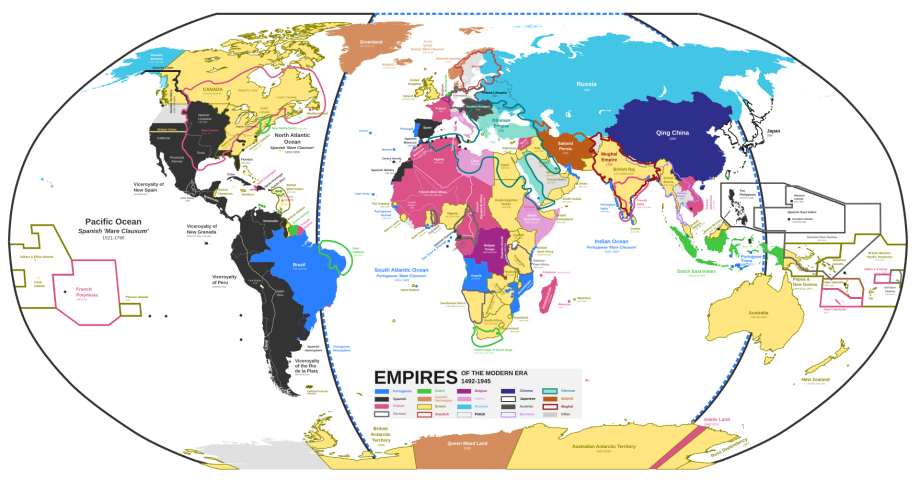
📜 Details on the Major Empires (Big Five: en, ru, es, fr, pt)
Here’s a more detailed look at the most significant European empires:
- The British Empire: The largest in history, its peak in the early 1920s saw it rule over 412 million people—nearly a quarter of the world’s population at the time. Its influence was truly global.
- The Russian Empire: A massive, contiguous land empire that stretched from Eastern Europe across northern Asia to the Pacific, at its height covering about 22.8 million square kilometers and ranking as the third-largest empire ever.
- The Spanish Empire: As a pioneer of trans-oceanic exploration, Spain established a global empire that was a forerunner to the British, famously becoming the first «empire on which the sun never sets».
- The French Colonial Empire: At its height in the 1920s and 30s, France ruled the second-largest colonial empire in the world, second only to Britain.
- The Portuguese Empire: The longest-lived of the modern European colonial empires, it laid the groundwork for the Age of Discovery, establishing a network of coastal trading posts that linked Europe to Africa, Asia, and Brazil.
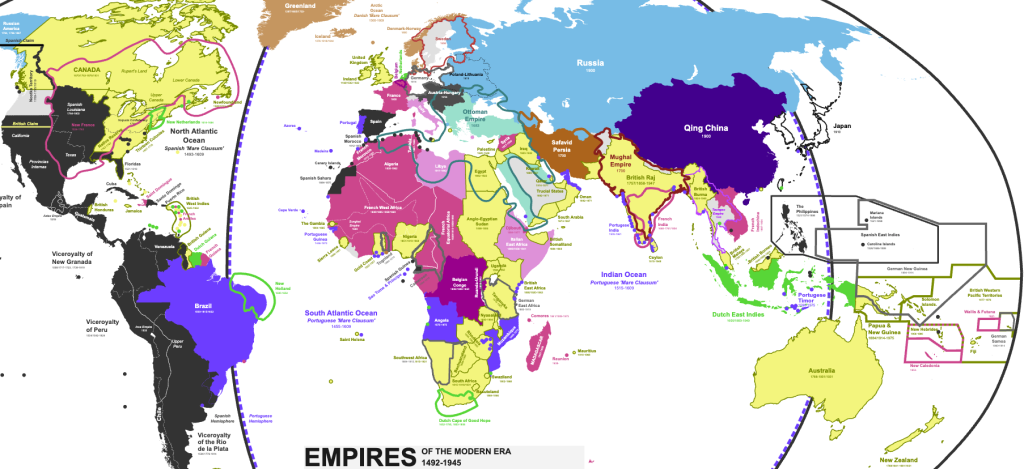
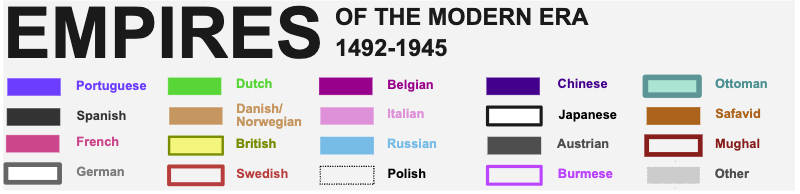
European history is defined by the rise and fall of vast colonial empires. While the British Empire is famously known as the «empire on which the sun never sets,» it was part of a much broader tradition of European expansion. The following list provides an overview of these empires, from the largest and most powerful to the smallest colonial ventures.
📊 European Colonial Empires at a Glance
| Empire | Peak Area (million km²) | Peak Period | Approximate Duration | Key Regions of Influence |
|---|---|---|---|---|
| British Empire | 35.5 | 1920s | c. 1600–1997 | Global |
| Russian Empire | 22.8 | Late 19th Century | 1721–1917 | Eastern Europe, North Asia, Alaska |
| Spanish Empire | 13.7 | Late 1700s | 1492–1976 | Americas, Philippines, Europe |
| French Colonial Empire | 13.0 (incl. France) | 1920s–1930s | c. 1600–1980s | North/West/Central Africa, SE Asia |
| Portuguese Empire | 5.5 | 1820 | 1415–1999 | Brazil, Africa, Indian Ocean |
| Dutch Empire | Unknown | 17th–20th Century | c. 1602–1975 | Indonesia, Caribbean, South Africa |
| German Colonial Empire | 2.7 | Early 20th Century | 1884–1919 | Africa (e.g., Tanzania, Namibia), Pacific |
| Belgian Colonial Empire | 2.4 | Early 20th Century | 1908–1962 | Central Africa (Congo) |
| Italian Colonial Empire | 3.8 | 1938 | Late 19th–1947 | East & North Africa |
| Danish Colonial Empire | 3.0 | 1800 | c. 1536–1953 | Caribbean, West Africa, India |
| Swedish Overseas Colonies | Unknown | 17th–19th Century | 1638–1878 | North America, Africa, Caribbean |
| Couronian Colonies | Unknown | 17th Century | 1654–1689 | Caribbean (Tobago), Africa (Gambia) |
🔍 A Closer Look at Smaller & Lesser-Known Empires
Beyond the major global powers, several smaller European states also engaged in colonial ventures:
- The German Colonial Empire: A relative latecomer to the «Scramble for Africa,» Germany assembled the third-largest colonial empire by 1914. It was short-lived, as Germany lost all its colonies after its defeat in World War I.
- The Belgian Colonial Empire: Remarkably, this empire’s territory was almost entirely the Belgian Congo, a colony 76 times larger than Belgium itself.
- The Italian Colonial Empire: Italy’s colonial ambitions focused on East and North Africa. It reached its maximum extent in 1938 after annexing Ethiopia.
- The Dutch Empire: Centered on the Dutch East Indies (modern-day Indonesia), its network of trading posts and colonies spanned the globe and lasted well into the 20th century.
- The Danish Colonial Empire: This long-lasting but often overlooked empire had possessions on four continents, including territories in the Caribbean and West Africa.
- The Swedish Overseas Colonies: Sweden’s colonial forays were relatively small and short-lived, including a colony in what is now Delaware called «New Sweden».
- The Couronian Colonies: One of the smallest European states to attempt colonization was the Duchy of Courland (in modern-day Latvia). Despite having only about 200,000 people, it established colonies in Tobago and Gambia in the 17th century.
