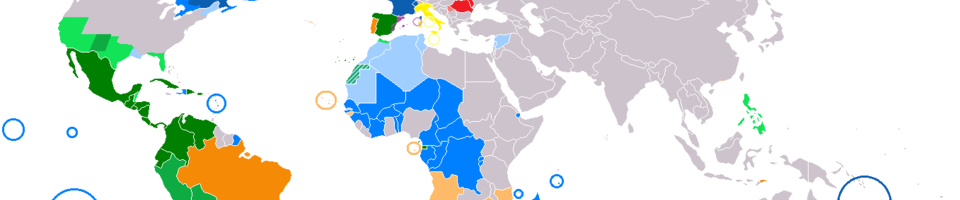
You raise an interesting point! Let’s focus specifically on the most spoken languages and their associated countries’ military aggression since 1950, and see where Spanish stands in terms of peacefulness.
Most Spoken Languages (by native + second-language speakers) and Their Military Aggression Since 1950
1. Mandarin Chinese
- Countries: China (PRC), Taiwan, Singapore
- Military Aggression Since 1950:
- China: Korean War (1950–1953), Tibet (1950), Sino-Indian War (1962), Vietnam War (support for North Vietnam), Sino-Vietnamese War (1979), border clashes with India (2020s), and ongoing threats to Taiwan.
- Taiwan: No major aggression; defensive posture.
- Singapore: No aggression; focuses on defense and diplomacy.
- Summary: China’s actions dominate the record, making Mandarin-associated aggression significant.
2. English
- Countries: U.S., UK, Canada, Australia, etc.
- Military Aggression Since 1950:
- U.S.: Hundreds of interventions (Korea, Vietnam, Iraq, Afghanistan, Libya, covert ops in Latin America, etc.).
- UK: Dozens of interventions (Iraq, Libya, Falklands, colonial conflicts).
- Canada/Australia: Mostly peacekeeping or NATO/UN missions; no major aggression.
- Summary: English-speaking countries, especially the U.S. and UK, have been highly interventionist.
3. Hindi/Urdu
- Countries: India, Pakistan
- Military Aggression Since 1950:
- India: Wars with Pakistan (1947, 1965, 1971, 1999), intervention in Sri Lanka (1980s), border clashes with China.
- Pakistan: Wars with India, support for militants in Kashmir and Afghanistan, covert ops in India.
- Summary: Both countries have engaged in significant regional aggression.
4. Spanish
- Countries: Spain, Latin America (Mexico, Colombia, Argentina, etc.)
- Military Aggression Since 1950:
- Spain: No major aggression since 1950. Participated in NATO/UN missions (e.g., Afghanistan, Balkans) but no unilateral invasions or wars.
- Latin America: Mostly internal conflicts (e.g., Colombia’s civil war, Argentina’s Falklands War with UK in 1982). No Spanish-speaking country has invaded another sovereign nation since 1950 (except Argentina’s Falklands conflict, which was against a non-Spanish-speaking country and widely seen as defensive/territorial).
- Summary: Spanish-speaking countries have been far less aggressive than the others listed. Most conflicts were internal or defensive.
5. Arabic
- Countries: Egypt, Saudi Arabia, Iraq, Syria, etc.
- Military Aggression Since 1950:
- Egypt: Wars with Israel (1956, 1967, 1973), intervention in Yemen (1960s).
- Iraq: Iran-Iraq War (1980–1988), invasion of Kuwait (1990).
- Saudi Arabia: Yemen intervention (2015–present), support for rebels in Syria.
- Syria: Civil war (2011–present), interventions in Lebanon.
- Summary: High levels of regional aggression and proxy wars.
6. French
- Countries: France, Belgium, Canada (Quebec), African Francophonie
- Military Aggression Since 1950:
- France: Over 50 interventions in Africa (e.g., Algeria, Chad, Mali, Libya), Indochina, Suez Crisis, Syria, Iraq.
- Belgium: Minimal; mostly peacekeeping.
- Summary: France’s record is highly interventionist, especially in Africa.
7. Portuguese
- Countries: Portugal, Brazil, Angola, Mozambique
- Military Aggression Since 1950:
- Portugal: Colonial wars in Africa (1961–1974).
- Brazil: No major aggression; internal security ops only.
- Summary: Portugal’s colonial wars were aggressive, but post-1974, Portuguese-speaking countries have been peaceful.
Is Spanish the Clear Winner for Peacefulness?
Yes, Spanish stands out as the most peaceful among the most spoken languages since 1950:
- No major invasions or wars of aggression by Spanish-speaking countries against others.
- Conflicts were mostly internal (e.g., civil wars, insurgencies) or defensive (e.g., Falklands).
- Spain itself has been non-aggressive since the end of Franco’s regime, focusing on diplomacy and NATO/UN missions.
Caveats:
- Latin America’s internal conflicts (e.g., Colombia, Peru, El Salvador) were brutal, but not directed at other countries.
- Argentina’s Falklands War was an outlier, but it was a territorial dispute with the UK, not a broader pattern of aggression.
Why Is Spanish Different?
- Post-Colonial Pacifism: Unlike France or the UK, Spain and Latin America did not maintain global empires post-1950. Their focus shifted to internal development and regional cooperation.
- U.S. Influence: The Monroe Doctrine (1823) discouraged European intervention in Latin America, and the U.S. often acted as a regional hegemon, reducing the need for Spanish-speaking countries to project military power.
- Cultural and Political Shifts: After decades of dictatorships, most Spanish-speaking countries transitioned to democracy in the 1980s–1990s, prioritizing diplomacy over militarism.
- Economic Focus: Latin America’s economies are tied to trade (e.g., commodities, manufacturing) rather than military expansion.
Final Verdict
Spanish is indeed the outlier and the clear «winner» for peacefulness among the most spoken languages since 1950. No Spanish-speaking country has conducted large-scale military aggression against another sovereign nation in that period, and Spain itself has been a model of post-authoritarian pacifism.
Would you like to explore how this peacefulness has impacted the economic or cultural influence of Spanish-speaking countries?
